Thinking about a horse-friendly home in Cave Creek, but not sure what living with horses in the Sonoran Desert really takes? You’re not alone. The landscape, heat, and trail systems here create a unique mix of rewards and responsibilities. In this guide, you’ll learn how to evaluate zoning, water, arenas, fencing, trail access, and the day-to-day logistics that make horse-property living work in Cave Creek. Let’s dive in.
Why Cave Creek works for horse owners
Cave Creek sits in the desert foothills on the north side of the Phoenix metro. The scenery is rugged and beautiful, with rocky hills, washes, and saguaro stands that set a true Western tone. This setting supports a lifestyle where you can ride in nature, then be close enough to city services when you need them.
You will need to plan for the climate. Summers are long and hot, and monsoon storms can arrive with dust, wind, and sudden rain. Shade, reliable water, and smart turnout schedules are essential. Many owners enjoy the quiet, rural character while keeping convenient access to veterinary care, feed suppliers, and specialty services in the greater Phoenix area.
Zoning, permits, and boundaries
Start by confirming whether a property sits within the Town of Cave Creek or in unincorporated Maricopa County. Rules can differ by jurisdiction and parcel, so your due diligence should be specific to the address. Zoning determines how many animals you can keep, what structures are allowed, and where they can sit on the land.
Before you buy or build, review typical permit needs: barns and arenas, well permits, septic systems, and any floodplain or wash setbacks. In wildland-urban interface areas, check fire-code and defensible-space requirements too. Every parcel is different, so verify the current rules and permits on file for the property you are considering.
HOA and deed restrictions
Beyond zoning, some neighborhoods have HOA covenants. These can affect the number of horses, setbacks, trailer parking, accessory buildings, or noise. Keep in mind that trail access rules are separate from zoning. A property can be zoned for horses without formal trail easements. If direct trail access is important to you, confirm it through recorded easements, not assumptions.
Land and layout essentials
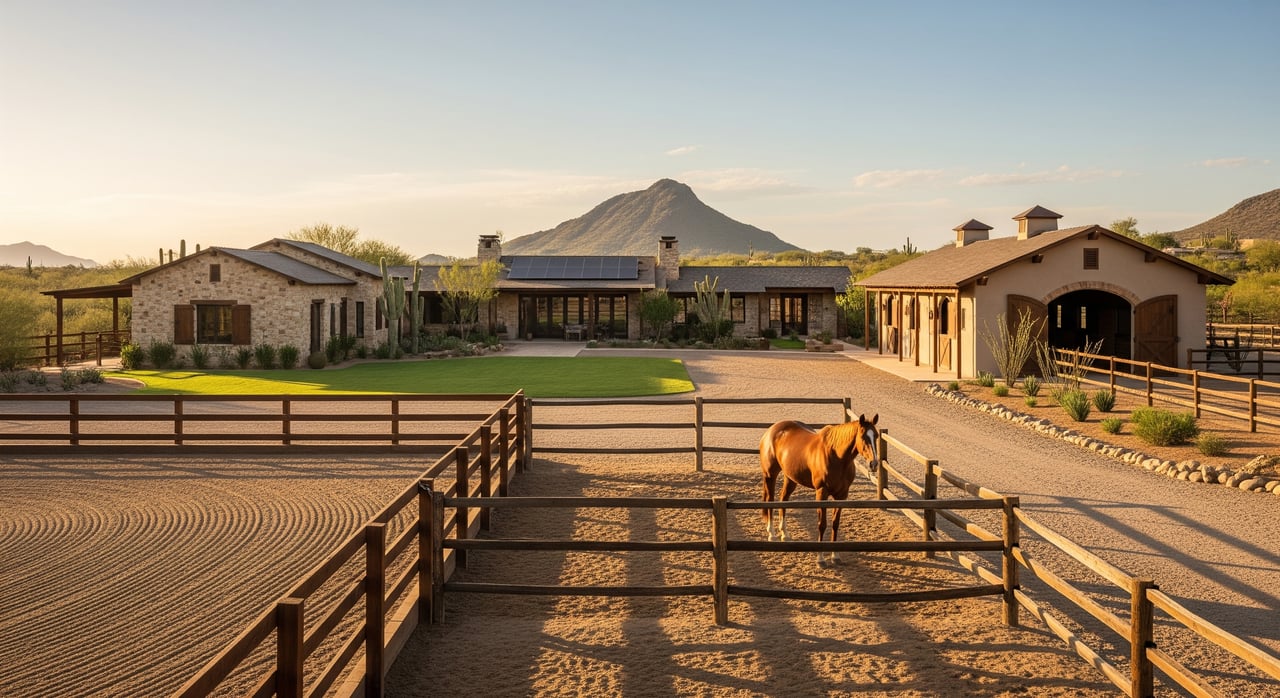
Acreage impacts daily routine, privacy, and how you set up stalls, paddocks, and arenas. In the desert, you will likely supplement with hay and irrigated forage rather than rely on continuous grazing. A smart layout usually includes a flat, well-drained barn pad, clear areas for hay storage and manure, and cross-fencing for rotation.
Consider practical zones: a separate catch pen, safe trailer parking, and a defined spot for compost or manure pickup. The goal is to streamline chores, reduce dust, and protect your animals and structures from storm runoff.
Water planning in the desert
Water is the biggest operational variable. If the property has a well, confirm the permit, well log, depth, and yield in gallons per minute, plus water quality. If there is hauled or municipal water, plan for storage tanks, delivery schedules, and a distribution system that will not fail in peak heat.
Automatic waterers and shaded or insulated tanks reduce labor and help protect horses during high temperatures. Irrigated pasture is possible but water intensive here, so account for the ongoing cost. Most owners rely on hay, with irrigation used to support limited forage.
Manure and waste management
Manure accumulates quickly. Many owners use a haul-off service, while others compost on-site. Place storage or compost areas away from wells, washes, and residences, and manage runoff and flies. If you plan commercial composting or large-scale systems, review local health and environmental department guidance.
Shelter and arena design
Barns should be oriented for airflow and protection from the afternoon sun and monsoon winds. Choose roofing and materials that minimize heat gain. Plan for wide aisles, secure feed storage, and organized tack areas.
Arena footing needs special attention in desert soils. Hard-packed native ground can get dusty and slick. Many owners import engineered footing and use watering or dust-control products. Good drainage prevents washouts when storms hit.
Fencing and gates
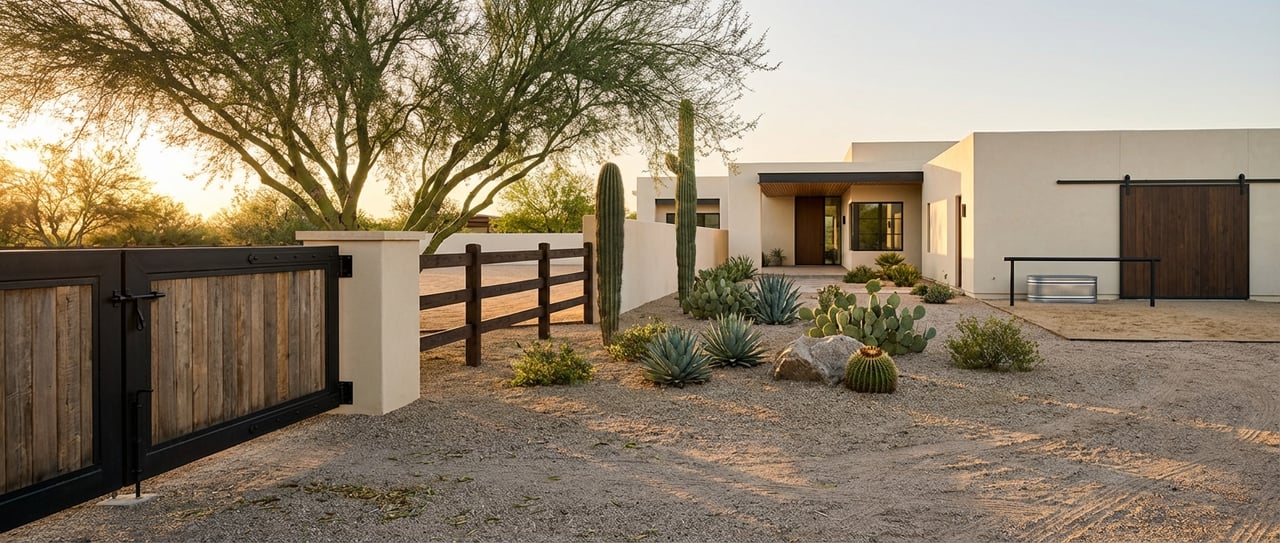
Safe, visible fencing is key. Common options include pipe, wood rail, vinyl rail, and welded wire with a top rail. Avoid barbed wire in horse areas. Cross-fencing lets you separate groups, rotate turnout, and manage introductions safely. Build sturdy gates and keep them clear of desert vegetation.
Heat and pests
Plan for pests and wildlife. Flies, seasonal mosquitoes, scorpions, and rattlesnakes are part of the environment. Use fly control, secure your feed, and keep storage areas tidy. For heat management, provide ample shade, adjust turnout and riding times, and consider electrolytes as advised by your veterinarian. A reliable water system is nonnegotiable.
Riding access and trails
Cave Creek is a gateway to excellent riding. Popular areas include Cave Creek Regional Park, Spur Cross Ranch Conservation Area, and Tonto National Forest. These lands have their own rules for horse use, parking, group size, and etiquette, and some trails are shared with hikers and cyclists.
Not every property has legal trail access from the fenceline. If that is important, verify recorded trail easements or proximity to public trailheads. Also check trailer parking rules and whether you need permits for events or group rides. Treat direct, legal access as a significant value point when comparing properties.
Services and everyday logistics
You are within reach of the Phoenix metro’s equine network. Many equine veterinarians, ambulatory emergency services, and specialty hospitals serve the region. Establish your emergency plan in advance and confirm drive times. Farrier schedules can book out, so get on a regular rotation.
Feed and tack suppliers are available in the north valley, with more options toward Phoenix and Scottsdale. Some deliver. Align your ordering cycle with your storage capacity and your horses’ needs, especially in peak summer when water and shade demand is highest.
Owning vs. boarding
Keeping horses on your property gives you full control, immediate access, and privacy. It also requires daily labor, ongoing maintenance, and responsibility for biosecurity and liability. Boarding reduces daily chores and offers professional care and amenities, but you trade immediate access and pay a monthly fee.
Many Cave Creek buyers choose a hybrid approach. For example, keep horses at home most of the year, then use a trusted boarding facility during extended travel. A barn-sitter or local barn manager can support a lock-and-leave lifestyle.
Insurance, financing, and appraisal
Review your insurance carefully. Standard homeowner policies may exclude or limit equine liability. Ask about personal liability for horse-related incidents, mortality and major medical coverage for valuable horses, and umbrella policies for higher limits. If you plan to offer lessons, boarding, or trail rides, explore commercial coverage and any required permits.
Financing for rural and equestrian properties can differ from typical suburban homes. Lenders may require verification for wells, septic systems, acreage, and road access. Appraisers often factor usable acreage, permitted barns and arenas, and trail access. Keep documentation for all permitted structures and improvements.
Smart buyer checklist
Use this quick list to structure your due diligence:
- Jurisdiction and zoning: confirm Town of Cave Creek or Maricopa County, allowed livestock, and setbacks.
- Water: well permit and log, depth, yield (gpm), water quality, pump age, and storage; if hauled or municipal, verify delivery and tank capacity.
- Septic: permit status, last service, and location relative to manure or compost areas.
- Barns and arenas: building permits, roof age, ventilation, footing materials, drainage, and monsoon readiness.
- Fencing and gates: safe materials, visibility, anchoring, and condition; avoid barbed wire in horse areas.
- Manure handling: current contracts for haul-off or a workable composting plan.
- Easements and access: recorded trail easements, legal right-of-way for trailers, and public trailhead details if advertised.
- HOA and deed rules: animal limits, trailer parking, setbacks, nuisance rules, and any commercial use restrictions.
- Adjacent land uses: activities like open grazing, ATV routes, or shooting ranges that could affect your horses.
- Wildfire readiness: defensible space, emergency vehicle access, and water availability for firefighting.
- Utilities and communications: power reliability, generator readiness, and cellular/internet coverage for monitoring and emergencies.
- Local services: emergency vet distance, farrier scheduling, feed/tack deliveries, manure removal, and equipment rental.
Resale and market considerations
The features that help you enjoy your horses also support resale. Buyers value permitted, well-built barns and arenas, strong fencing, dependable water, legal trail access, and defensible space around structures. Properties with strict non-equine restrictions appeal to a broader market, while true horse properties speak to a focused buyer pool. If you plan improvements, keep records and permits. They can help both appraisal and future marketing.
Buying a horse property here is about aligning your riding goals with the realities of the desert. When you match the right parcel to a clear plan for water, shade, footing, and access, daily life flows—and you get the freedom to ride on your schedule.
Ready to explore Cave Creek horse properties with a team that understands luxury, lifestyle, and the details that make equestrian living work in the desert? Reach out to the Kelli Grant Group for a private consultation and a tailored plan for your search.
FAQs
How many horses can I keep on my Cave Creek property?
- It depends on your specific zoning, parcel size, and any HOA or deed restrictions. Confirm local rules for animal counts, setbacks, and use before purchase.
Do Cave Creek homes have legal trail access from the property line?
- Only if a recorded easement or adjoining public trail exists. Never assume visual access equals legal access; verify documentation or proximity to public trailheads.
What should I know about wells and water for horses in Cave Creek?
- Verify the well permit, depth, yield in gpm, and water quality. If using hauled or municipal water, plan for storage and delivery. Reliable water is essential in summer heat.
How do I manage dust and footing in a desert arena?
- Consider imported footing mixes, routine watering or dust-control products, and regular dragging. Design for drainage to handle monsoon rains.
Is wildfire a concern for horse properties near Cave Creek?
- Yes. Create defensible space, use noncombustible materials where possible, plan evacuation for horses, and ensure emergency vehicle access and water availability.
Should I keep my horse at home or board nearby?
- Keeping horses at home provides control and convenience but adds daily labor and maintenance. Boarding offers professional care and amenities with a monthly cost. Many owners use a hybrid approach.