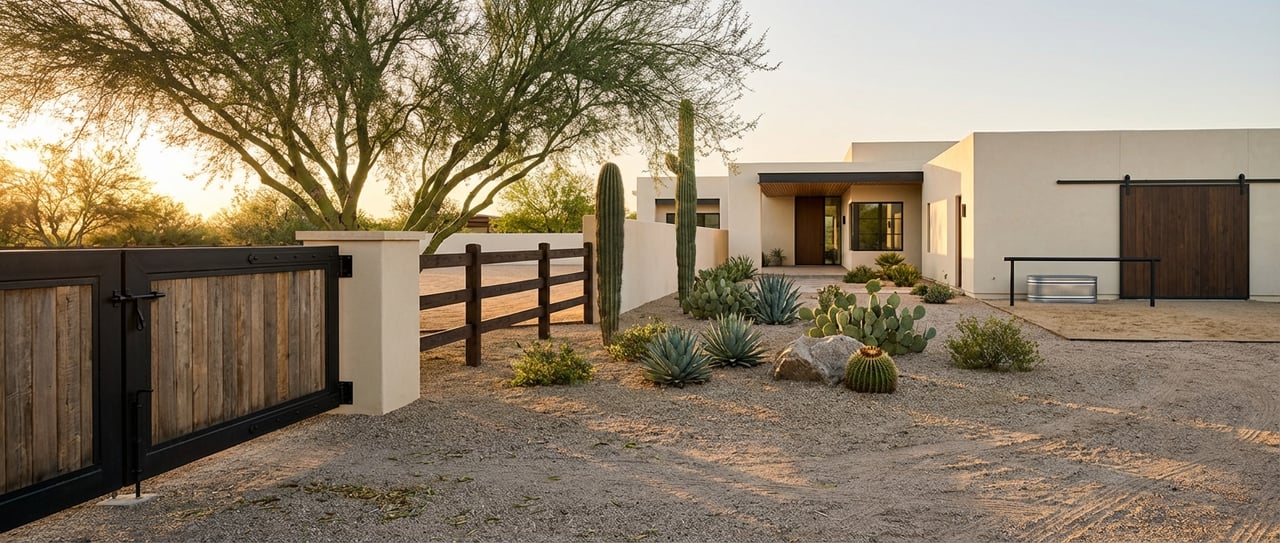
Is Cave Creek calling you with big skies, quiet nights, and room for horses? If you are exploring a luxury ranch or equestrian estate, you want confidence about what you can build, how you will care for your animals, and what daily life really looks like. In this guide, you will learn the essentials of zoning, water and road access, barn and arena features, operating costs, and the lifestyle trade-offs that make Cave Creek unique. Let’s dive in.
What ranch living means in Cave Creek
Luxury ranch living in Cave Creek blends privacy, acreage, and direct access to desert trails with a strong Western identity. Many buyers seek 2 to 10 plus acres, custom homes, and on-site equestrian improvements like barns, arenas, and turnouts. The result is a lifestyle centered on space, function, and a close connection to the Sonoran Desert.
Zoning basics you should confirm
Cave Creek recognizes large areas of Open Space and Desert Rural (DR) zoning. The Town states that owning horses or livestock is a right for owners of at least two contiguous acres in a DR zone. Always verify the specific zoning designation for any parcel before you assume horse rights. You can find the Town’s buyer guidance in the official Notice to Prospective Property Owners.
CC&Rs and plat notes can affect use
Even when zoning allows ranch uses, private deed restrictions can limit them. Recorded CC&Rs or subdivision conditions may prohibit barns, arenas, certain fencing, or livestock. Cave Creek has historically noted ranch rights on some final plats, but not all. Review the recorded plat, title report, and CC&Rs for each property, and ask your agent to confirm anything unclear. The Town has discussed cases like this in its zoning and plat archives.
Lot size and features to expect
Luxury ranch parcels commonly span 2 to 10 plus acres. Many high-end properties position the home and arena on usable, level pads and preserve natural slopes and ridgelines for views and privacy. You will often see cross-fencing that separates the home zone from horse areas while maintaining strong indoor and outdoor flow.
Typical equestrian improvements
Well-outfitted ranch properties often include:
- Multi-stall barns with tack rooms and wash racks
- Outdoor arenas or round pens with proper footing and drainage
- Covered loafing areas and fenced turnouts
- Hay and equipment storage, plus RV or trailer parking
- Guest casitas or viewing decks near arenas
If you plan upgrades, evaluate arena siting, soil and footing, drainage, power and water to the barn, and how horses and vehicles move through the site.
Utilities and access that impact daily life
Water, sewer, and wells
Public water and sewer do not reach every area of Cave Creek. Some parcels rely on private water companies, hauled water, or private wells. Water service and rates can vary by location. Before you write an offer, confirm which system serves the property, review any well permits and pump tests, and check septic permits and inspection records. The Town outlines these checks in its buyer notice.
Roads, easements, and trailer access
Many ranch properties are accessed by private or low-volume rural roads that are not maintained by the Town. This affects maintenance costs, emergency access, travel during storms, and how easily you can move a horse trailer or RV. Confirm recorded access easements and who maintains the road. You will find this caution in the Town’s buyer notice.
Environmental overlays and trails
Cave Creek preserves large areas of open space and native desert. Wash corridors, slope and hillside overlays, protected vegetation, and dark-sky rules can limit where you place an arena or outdoor lighting. Many properties benefit from nearby trail systems and the Spur Cross Ranch Conservation Area, which offer scenic riding and a strong sense of place.
How to verify horse-ready vs horse-limited
1) Confirm zoning and private restrictions
- Ask for the property’s DR zoning designation, then request the title report, recorded plat, and CC&Rs. Even if the Town allows ranch uses, CC&Rs can restrict them. The Town’s planning materials and archive records highlight why you must verify each parcel.
2) Check setbacks, grading, and lighting rules
- Review setback requirements for barns and corrals, maximum lot coverage, and permits needed for grading and arena construction. Ask the Town Planner to outline the permitting steps for your exact site.
3) Verify water, septic, and capacity
- Confirm whether the property uses municipal water, a private company, a registered well, or hauled water, and request well logs and flow tests. Pull septic permits and an inspection report. The buyer notice advises this due diligence.
4) Map washes and floodplain limits
- Check FEMA and County resources to identify any mapped floodplain or wash corridors on the lot. Arena or corral placement in washes is often restricted. Start with Maricopa County’s floodplain FAQs.
5) Assess trail and service access
- Proximity to roping and event venues, feed and tack shops, hay suppliers, and mobile vets can save time and money. The active local scene is reflected in coverage of North Phoenix and Cave Creek arenas in the Team Roping Journal.
Costs and risk planning you should expect
Ongoing care costs
Horse ownership costs vary by your program. Feed, bedding, farrier, veterinary care, and utilities form the core. Maintenance for fencing, arena footing, barns, and driveways adds to the budget, especially with multiple horses. University extension tools help you build a plan that fits your property and goals. Start with the University of Kentucky’s equine budget tools. If you want additional local education, explore the University of Arizona’s equine resources.
Utilities and site equipment
Arena watering and barn operations increase water and power needs. Many owners invest in well service plans, storage tanks, and backup power to keep pumps running. Because Cave Creek water service and rates can differ by parcel, review service boundaries and recent bills for each property in the buyer notice.
Insurance and liability
Farm and equine liability policies differ from standard homeowners coverage. You may need public liability coverage and protection for barns, contents, and equipment, with limits tied to how you use the property. For a primer on coverage types and risk controls, see Farm Commons’ insurance basics. Work with a broker who knows equine risks to price your specific exposure.
Wildfire and animal evacuation
Cave Creek recognizes seasonal wildfire risk. Create a defensible space around structures, plan your evacuation route, keep trailers ready, and identify off-site hosting options in advance. The Town shares guidance on its Wildland Fire Prevention page. Practice loading your horses and keep essential gear staged.
Lifestyle trade-offs vs master-planned communities
Ranch parcels deliver privacy, acreage, night skies, and trail access. The trade-offs can include more hands-on maintenance, variable road conditions, and fewer municipal services within immediate reach. The Town outlines these expectations in its buyer notice. If you want both ranch character and resort amenities, explore nearby options like Rancho Mañana Golf Club for dining and golf close to town.
A smart buyer’s due diligence checklist
Use this quick reference as you evaluate each property:
- Confirm DR zoning and whether you have two contiguous acres that qualify for ranch and livestock rights. Get written confirmation from the Town Planner using the buyer notice as your roadmap.
- Pull the title report, recorded plat, and CC&Rs. Look for plat notes that allow or limit ranch uses. Review the Town’s zoning and plat archive to understand how restrictions work.
- Verify water source, well permits and pump tests, and septic permits and inspection reports. Check if sewer is available or mandatory per the buyer notice.
- Map washes and any floodplain overlays. Confirm arena and corral placement is outside restricted areas using County floodplain FAQs.
- Inspect barns, stalls, fencing, footing, drainage, hay storage, and equipment access. Get contractor bids for any upgrades you plan.
- Build a care and operating budget with university equine tools. Price farrier, vet, hay, and utilities with local providers.
- Identify nearby equine services and arenas by reviewing event hubs covered in the Team Roping Journal.
- Consult an insurance broker about farm and equine liability coverage guided by Farm Commons’ insurance overview.
- Evaluate wildfire defensible space and create an evacuation plan using the Town’s Wildland Fire Prevention guidance.
- For commute and school planning, confirm drive times and review district information with Cave Creek Unified’s schools page.
Ready to find the right ranch fit? Our team pairs luxury expertise with careful due diligence so you can buy with clarity and enjoy the lifestyle you came for. Reach out to the Kelli Grant Group to start a private search, plan improvements, and position your move with confidence.
FAQs
What zoning allows horses in Cave Creek?
- The Town states that horse and livestock rights apply to owners with at least two contiguous acres in a Desert Rural zone, but you must verify your parcel’s zoning and any private restrictions using the Town’s buyer notice.
Can CC&Rs override horse-friendly zoning?
- Yes, recorded CC&Rs or subdivision conditions can prohibit barns, arenas, or livestock even if zoning allows them, so review the title, plat, and CC&Rs and reference the Town’s archive guidance.
How do water and sewer work on ranch parcels?
- Service varies by area, and some properties use private water companies, wells, or hauled water while sewer is not available everywhere, so confirm service boundaries, well records, and septic permits using the Town’s buyer notice.
Where can I ride or access trails near Cave Creek?
- Many properties connect to local trails and public land, with scenic riding in the Spur Cross Ranch Conservation Area and a broader roping and arena scene covered by the Team Roping Journal.
What insurance do I need for a horse property?
- Farm and equine liability coverage differs from homeowners insurance, and policies should match your use and assets, so review options with a specialized broker using Farm Commons’ insurance basics.